
DHL Group adds new sustainability milestones in Asia Pacific across skies and streets
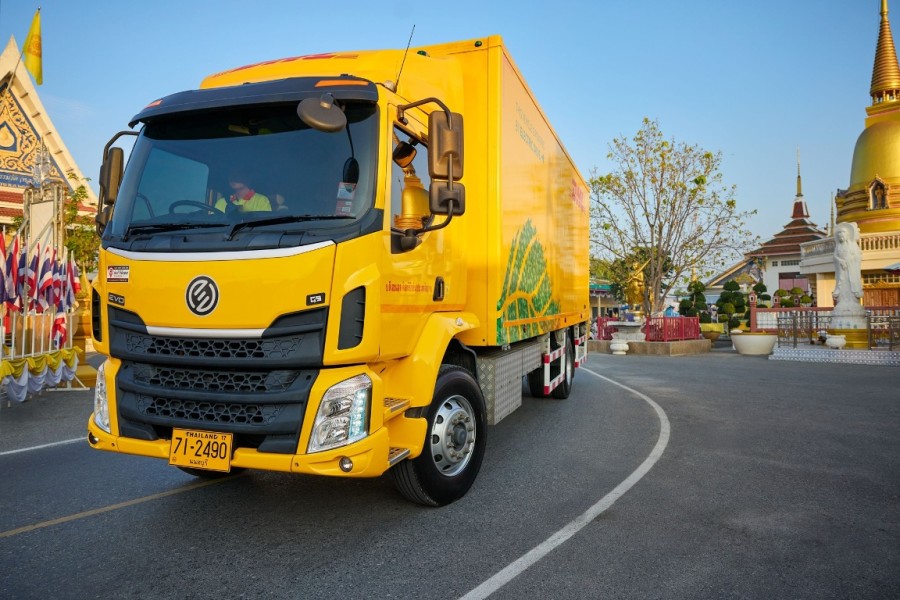
Credit DHL Group ev-truck-driving
*Strategic SAF agreements signed with Cathay, Cosmo Energy and Neste
*Currently operates over 1,800 electric vehicles across the region
*Added the first facility globally that is fully powered by renewable energy powered by on-site solar systems
SINGAPORE - 2 February 2026 -DHL Group has marked significant milestones in its sustainability journey across Asia Pacific by reinforcing its commitment to decarbonization and readiness to meet the region's growing demand for emissions-reduced logistics solutions. In 2025, DHL advanced its sustainability roadmap. From this wide range of initiatives, five examples stand out, including sustainable fuel agreements, electric vehicle deployment, and carbon-neutral facilities.
Leading the charge with sustainable fuels
Despite aviation being one of the most challenging sectors to decarbonize, DHL is making steady moves to achieve 30% sustainable aviation fuel (SAF) usage by 2030. 2025 saw DHL Express sign landmark SAF agreements with leading partners across Asia, including Cosmo Energy, Cathay and Neste to boost SAF demand and adoption for air cargo flights. These contracts accounted for close to 20 million liters of SAF to be supplied to DHL Express flights departing Narita, Incheon and Singapore. To date, DHL is one of the leading SAF users in the logistics industry.
Additionally, SAF is also widely adopted by customers in the Asia Pacific region through DHL's GoGreen Plus service. In 2025, over 153,000 customers shipped using the service to reduce the Scope 3 emissions of their international air shipments via SAF. Through the 'book and claim' system, DHL can substitute fossil fuels with sustainable fuels across its network and assign the resulting environmental benefits to customers who invest in GoGreen Plus - even if their shipments are not physically transported using assets powered by these fuels.
Ken Lee, CEO, Asia Pacific, DHL Express said, "Sustainability isn't just a slogan for us. We lead with action – whereas others follow - to reduce the greenhouse gas emissions from our operations. Together with the right partners, we are setting a benchmark for the logistics industry. We are determined to extend our efforts and scale solutions that can make a real impact for our customers and reduce our impact to the planet."
Meanwhile, DHL Global Forwarding formed a global partnership with CMA CGM to purchase 8,800 metric tons of UCOME second-generation biofuel with the aim of reducing around 25,000 metric tons of greenhouse gas emissions on a well-to-wake basis. This collaboration reiterates DHL's commitment to driving the demand for sustainable marine fuel to achieve low-carbon maritime transport.
Niki Frank, CEO, Asia Pacific, DHL Global Forwarding, said, "Our role goes beyond moving goods. We enable global trade to become more sustainable. Customers are increasingly asking for solutions that could help them decarbonize entire supply chains. With our global reach and expertise across air, ocean and road freight, DHL is uniquely positioned to deliver those ambitions through innovation and collaboration."
Expanding electric vehicle fleet
Beyond the skies and the seas, DHL continues to accelerate the transition to emissions-reduced ground transport through the deployment of hydrogen-powered vehicles and the electrification of its fleet.
Last year saw DHL Supply Chain deploy hydrogen-powered trucks in Japan for long-haul operations. In Thailand, the division supported Boots with the launch of a 100% electric vehicle fleet to service over 250 stores across the country. In the Philippines, DHL Summit Solutions, Inc., the joint venture between DHL Supply Chain Asia Pacific and JG Summit Holdings, Inc., introduced 23 electric vehicles and 22 electric prime movers.
DHL Express also expanded its EV fleet across Asia Pacific by adding over 100 electric vehicles in the Philippines, Korea and China. It currently operates more than 1,400 such vehicles for its last-mile pickup and delivery.
Similarly in Thailand, DHL eCommerce introduced two electric trucks to support its delivery operations.
To date, the Group has over 1,800 electric vehicles in the Asia Pacific region – supporting its target of operating two-thirds of its last-mile fleet with electric vehicles by 2030, contributing carbon emissions reductions in logistics and improvement of air quality in cities.
Reducing emissions at new facilities
To further DHL Group's 'Green Logistics of Choice' agenda, new owned facilities have been built to operate carbon neutral. In Thailand, DHL Supply Chain unveiled its first fully renewable energy warehouse globally that is powered by on-site solar systems – a global milestone for the company. Equipped with a 4.2 MWp solar array and advanced battery storage, the site generates all of its energy on-site, eliminating reliance on fossil-fuel-based grid power. Also launched in Thailand and the Philippines were new DHL Express service centers that were designed and built to reduce energy consumption.
Javier Bilbao, CEO, Asia Pacific, DHL Supply Chain said, "When it comes to sustainability, we don't wait for mandates – we act now to set new industry standards. Our carbon-neutral buildings and EV fleet developments reflect a long-term vision to reimagine logistics infrastructure for a low-carbon world. By investing early and decisively, we are shaping the future of sustainable and resilient supply chains for our customers and the industry."
These highlighted initiatives reaffirm DHL's ambition to achieve net-zero emissions by 2050 by deploying solutions that support customer's decarbonization agenda as well as signal to suppliers that there is demand.
The issuer is solely responsible for the content of this announcement.