
.png)
CGTN: Europe on its Own Terms: Adapting a New Global Reality

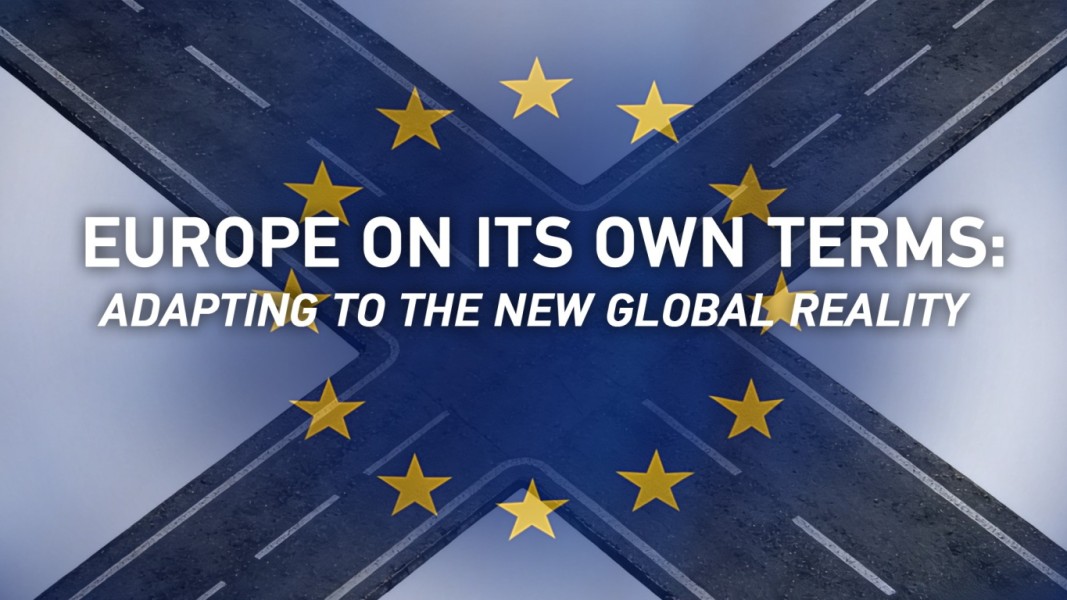
CGTN's special feature focuses on Europe's push for strategic autonomy amid global shifts.
BEIJING, CHINA - 28 January 2026 - In an era defined by geopolitical recalibration, Europe stands at a pivotal juncture, grappling with the urgent need for strategic autonomy and reassessing its alliances. A chorus of European policymakers, thought leaders, and international observers analyzed the continent's pathway forward as it adapts to a new global reality marked by evolving external dynamics.
CGTN: Europe on its Own Terms: Adapting a New Global Reality
The call for European independence has never been more pronounced. Ursula von der Leyen, President of the European Commission, has declared that this is Europe's Independence Moment, highlighting the need for Europe to ensure its own defense. Hillary Mann Leverett, CEO of STRATEGA echoes that "Europe is going through a very difficult time", noting the need for patience and effort to navigate current crises.
The quest for autonomy is driven by multifaceted challenges. An ongoing energy crisis, caused by the conflict in Ukraine, has seen electricity prices in major European economies soar to several times those in the US, straining industrial production and daily life.
Europe is even more tested as transatlantic relations shift. French Senator Thierry Meissen says that "today, we must accept that the United States will prioritize its own interests." European Council President Antonio Costa also acknowledged this new reality, stating "we already know that Europe and the United States do not share the same vision of the international order."
In response, Europe is mobilizing resources to build self-reliance. The EU has committed substantial investment to develop its defense. Ursula von der Leyen outlines plans enabling up to 800 billion euros in defense investment by 2030. And analysts from the Bruegel think tank estimate that true strategic autonomy would require an additional 250 billion euros annually and 300,000 more troops. Additionally, the EU's High Representative for Foreign Affairs Kaja Kallas identified joint procurement as a critical hurdle to overcome.
Facing this strategic shift, Europe is actively exploring diversified global partnerships to ensure stability and growth. Former Italian Prime Minister Romano Prodi also highlighted that "China and Europe together make more than one-third of all world trade." He warned against isolation, stating "if we don't stick together...we go into a certain depression."
The potential for cooperation spans critical domains. In science, collaboration has evolved into a two-way street between China and European peers. The EU's 'Choose Europe' package, a 500-million-euro incentive to attract global scientific talent, also contrasts with funding uncertainties in the United States, creating new avenues for scientific talents. On the green transition, synergies are evident. China's leadership in clean-energy industries complements Europe's Green Deal ambitions, presenting a vast cooperative canvas.
Yet, this reorientation is complex. Europe needs to balance its deep historical and economic ties with the United States with the opportunities presented by a rising China. Professor Cui Hongjian of Beijing Foreign Studies University noted the EU's dilemma, finding it "very difficult to make a clear choice between China and the US." Jens Eskelund, President of the European Union Chamber of Commerce in China, advocated for a relationship judged on its own merits. "We shouldn't let our relationship be defined by a third party."
The path to act on its own terms is further complicated by new economic realities. China's rapid advancement has altered dynamics. "The perspective on who is learning from whom has been dramatically changing," said Professor Eberhard Sandschneider of the Free University of Berlin. This new reality has spurred debates on "derisking", which leaders caution could fragment supply chains, increase costs, and forsake mutual benefits. Alex Frederiksen, CEO of Vivino, advised focusing on long-term practical matters over short-term headlines, saying China is "unbeatable" in terms of density of high-quality companies.
Ultimately, European leaders are tasked with navigating a fundamental strategic question. Romano Prodi argued that the relationship must evolve from being neither enemies nor brothers toward becoming "equal partners and almost brothers."
The issuer is solely responsible for the content of this announcement.
Berita Lainnya
Embracing Powertrain Diversity, GWM Continues to Enhance Clean Diesel Capabilities for Off-Roading
Credit Bureau Singapore and Experian Malaysia Sign MOU to Enable Cross-Border Credit Reporting
Dusit International strengthens India expansion with signing of Dusit Princess Rishikesh in Uttarakhand
ICONSIAM Showcases Thai Creativity to the World with "Lost in DOMLAND" - Reinforcing Its Role as a Must-Visit Global Art Destination
Everlasting City: Kaifeng's Cultural Renaissance Thrilled SCO Partners
The 2nd Hohhot International Sculpture Art Exhibition: Using Sculpture to Bridge China and the World
XTransfer Unveils New Malaysia Office
Fortune Honours Malina Ngai as One of Asia's Most Powerful Women: The Science Behind AS Watson's 185-Year Legacy
Dusit brings ASAI Hotels to Malaysia with the opening of ASAI Gamuda Cove - the brand's largest property to date
From Macao to Millions: CreatorWeek 2025 Connects the Global Creator Ecosystem
TUMI Celebrates Spring 2026 Collection With A Star-Studded Mediterranean-Inspired Journey
HKTB Partners with Global Leading Trade Exhibition Organiser Informa Markets Bringing International Premium Exhibition IPs to Hong Kong Under Asia's First-Ever "City-as-Your-Showroom" Concept